
Conquest of Coomassie Ashanti African American Black Nationalist Poem 1923 1stEd
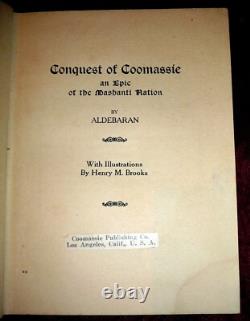

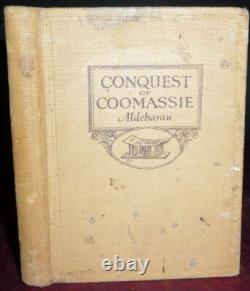

Conquest of Coomassie Ashanti African American Black Nationalist Poem 1923 1stEd. An Epic of the Mashanti Nation. By Aldebaran Pseudonym of A. Byer With Illustrations by Henry M.
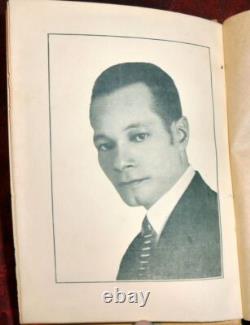
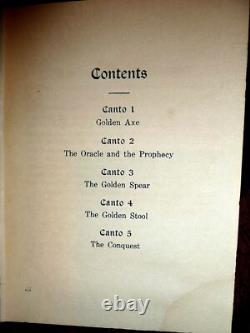
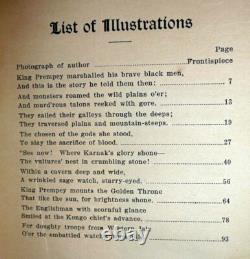
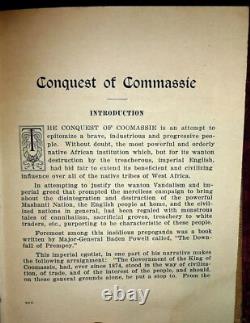
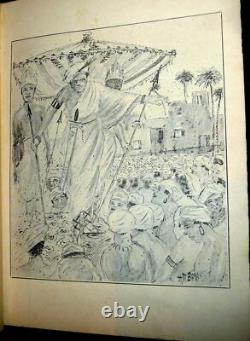
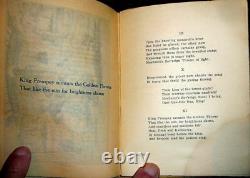
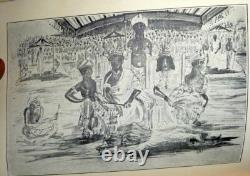
Decorated tan cloth hard covers, 4.75 inche X 6.25 inches, tissue-protected frontispiece portrait of the author, b&w illustrations. The book is dedicated to the Black writer, Y. An epic poem chronicling the Ashanti nation and its struggles against the British conquest and Christian influence. The five long,'political','revolutionary' cantos are about the British invasion of the Gold Coast and the determined anti-colonial resistance of the Ashanti.
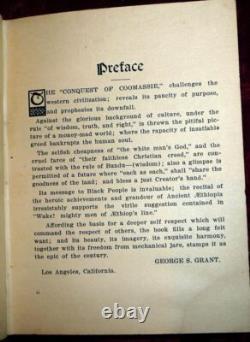
The preface of the book was written by George S. The author migrated from Barbados to the USA and lived in California (Long Beach or Los Angeles). In the 1920s he was president (and probably the owner) of'The Coomassie Publishing Company'. The Ashanti Region of Ghana is a kingdom of gold, history and culture. Occupying a central portion of modern Ghana, the region is the hub of the ancient kingdom of the Asante, and still the heartland for all Asante, wherever they may now be.Kumasi [is] the ancient capital of the region founded in 1695 by the Asantehene, Osei Tutu, where palaces, museums, forts and churches reveal the distinct cultural and historic backdrop for the festivals and ceremonies that are still important today. Kumasi (historically spelled Comassie or Coomassie) is a city in Ashanti Region, South Ghana and is among the largest metropolitan areas of Ghana. Kumasi is located near Lake Bosumtwi, in a Rain Forest region, and is the commercial, industrial and cultural capital of Asanteman. Kumasi is approximately 300 miles (480 km) north of the Equator and 100 miles (160 km) north of the Gulf of Guinea.
Kumasi is alternatively known as "The Garden City" because of its many beautiful species of flowers and plants. It is also called Oseikrom.There is evidence that the area around Kumasi has been kept cleared since the Neolithic age, and that the first human settlement was at Lake Bosumtwi. The city rose to prominence in 1695 when it became capital of the Ashanti Confederacy due to the activities of its ruler Osei Tutu.
The ruler of Kumasi, known as the Asantehene, also served as ruler of the Confederacy. With their 1701 victory over Denkyira the Asante confederacy became the primary state among the Akans. [4] Parts of the city, including the Royal Palace, were destroyed by British troops in the Third Anglo-Ashanti War of 1874. Lady Mary Alice Hodgson, the first English lady to visit Ashanti, wrote "The Siege of Kumassi" an account of the siege of the fort by the nationals of Ashanti Confederation and of the subsequent march to the coast.. Kumasi remains a royal city, in 1926 the Ashanti was restored ceremonial control over Kumasi, the full role of king was restored in 1935.The city holds an important place in the history of the Ashanti people, as legend claims that it was here Okomfo Anokye received the Golden stool, an embodiment of the soul of the Ashanti nation. Very scarce copy of 1923 original edition. Covers have spotting, moderate edge and corner corners. Light dampstains on lower corners of all pages.
Check our other auctions and store listings for additional unusual items. Listing and template services provided by inkFrog.